 Task Three: From analogue to digital editing
Analogue editing
Analogue editing was before all the new technology we have today where you can easily and quickly edit a film. Analogue editing is the cutting together of pieces.
Originally films are made up images printed on to acetate negatives.
After these are then ''spliced'' together to create a reel of film.These are then fed trough a projector at a constant rapid speed of 24 frames with in a second which makes he picture appear to be moving. This is mostly known as analogue.
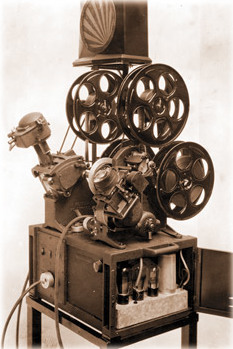 The first moviola
 Before the widespread use of non-linear editing systems, the initial editing of all the film negative called a film work print(cutting copy in UK) by physically cutting and pasting together bits of film on a machine with a viewer such as a moviola.
Video editing
Video editing is a core role in film and television production. Video editing is the process of editing segments of motion video production footage, special effects and sound recordings in the post-production process. Before digital technologies became available magnetic tapes were used to store information- these are known as video tapes. Almost all video editing has been replaced by digital editing which is faster and cheaper.It provides different types of effects and ways to edit a film in the modern world. You can crop videos, trim videos, capture pictures, add watermark or adjust the video effect.
Digital editing
Digital media is a form of electronic media where data are stored in a digital form. Digital editing is the use of computers to order and manipulate this digital data. Digital cinema uses bits and bytes to record, transmit and reply images instead of chemicals on films. The whole process is electronic so there is no printing or splicing involved.
Non-linear editing
Non-linear editing for films and television post production is a modern editing method which enables direct access to any frame in a digital video clip. In digital video editing, non-linear editing is a method that allows you to access any frame in a digital video clip regardless of sequence in the clip. You will be able to access any frame, and use a cut-and-paste method, similar to the ease of cutting and pasting text in a word processor, and allows you to easily includes fades and transitions, and other effects that cannot be achieved with linear editing. Compared to linear editing method of tape-to-tape editing, non linear offers the flexibility of film editing, with random access and easy project organisation.
linear editing is a post production selecting process in arranging and ordering images, sound and clips. When capturing a video by a video camera, tape less camcorder or recorded in a television studio on a video tape recorder and the content must be accessed in sequentially. So you will not be able to place frames in any order you want.
Final cut
Final cut pro is a non-linear video editing software. Today most films are edited digitally and bypass the film positive.
Digital editing
Digital media is a form of electronic media where data are stored in a digital form. Digital editing is the use of computers to order and manipulate this digital data. Digital cinema uses bits and bytes to record, transmit and reply images instead of chemicals on films. The whole process is electronic so there is no printing or splicing involved.
Non-linear editing
Non-linear editing for films and television post production is a modern editing method which enables direct access to any frame in a digital video clip. In digital video editing, non-linear editing is a method that allows you to access any frame in a digital video clip regardless of sequence in the clip. You will be able to access any frame, and use a cut-and-paste method, similar to the ease of cutting and pasting text in a word processor, and allows you to easily includes fades and transitions, and other effects that cannot be achieved with linear editing. Compared to linear editing method of tape-to-tape editing, non linear offers the flexibility of film editing, with random access and easy project organisation.
linear editing is a post production selecting process in arranging and ordering images, sound and clips. When capturing a video by a video camera, tape less camcorder or recorded in a television studio on a video tape recorder and the content must be accessed in sequentially. So you will not be able to place frames in any order you want.
Final cut
Final cut pro is a non-linear video editing software. Today most films are edited digitally and bypass the film positive.


No comments:
Post a Comment