Tuesday, 24 June 2014

Task Six: Non-Continuity

Task Six: Non- Continuity 

Non continuity editing- A director would use choose to use non continuity editing instead of the more widely accepted continuity editing because non continuity editing it reminds the audience that they are watching a film. Filmmakers such as Jean Luc Gordard and Francois Truffaut where know as the French New Waves because they pushed the limits of editing technique during the late 1950s and throughout the 1960s. Non continuity editing are often based on graphic and rhythmic qualities of film e.g. light, texture, shape and movement. The narrative in the film becomes less important.
Characteristic of non continuity editing:
-May violate 180 rule
-Jump cut
-Nondiegetic inserts
-Jarring shot transitions
-Disturbs normal expectations about art and narrative
-Disjunctive
-Distantiation
In the 1960s French New Waves films and non narrative films used a carefree editing style and did not conform to the traditional editing manner of Hollywood films. French New Waves style of editing drew a lot of attention for it lack of continuity editing and the continuous use of jump cuts or the insertions of material not often related to any narrative.    


In film The Shinning bathroom scene, throughout the whole the scene when filming the camera stays on one side of the imaginary line. If you cross or break the line will look as if they have switched positions on the screen. They did because so that they can create a deliberate effect of interest to the audience.  


A bout de Souffle Jean Luc Godard jump cut. The Jump cut is type of edit that gives the effect of jumping forwards in time. It is the manipulation of temporal space length of a single shot and the fracturing the extent of the audience attention. In this film scene you will see cut from one shot to shot two which will make the subject to appear to jump in an abrupt way. This will startle the audience because the want the audience to draw attention to that scene making them think that they are watching a film.


In this scene from the Hunger Games it shows the breaking of the 180 degree rule on purpose. The bedroom switches from left to right. This is done deliberately to enable the audience visually see the movement. This will make the audience feel part of the action or scene giving the consideration of breaking the rule.      

Tuesday, 10 June 2014

Task Three: From analogue to digital editing

 Task Three: From analogue to digital editing
Analogue editing
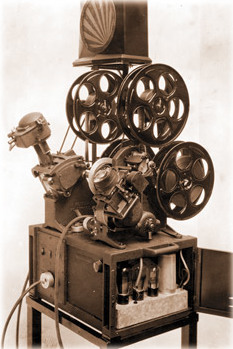
Analogue editing was before all the new technology we have today where you can easily and quickly edit a film. Analogue editing is the cutting together of pieces. Originally films are made up images printed on to acetate negatives. After these are then ''spliced'' together to create a reel of film.These are then fed trough a projector at a constant rapid speed of 24 frames with in a second which makes he picture appear to be moving. This is mostly known as analogue. 
The first moviola

Before the widespread use of non-linear editing systems, the initial editing of all the film negative called a film work print(cutting copy in UK) by physically cutting and pasting together bits of film on a machine with a viewer such as a moviola.
Video editing
Video editing is a core role in film and television production. Video editing is the process of editing segments of motion video production footage, special effects and sound recordings in the post-production process. Before digital technologies became available magnetic tapes were used to store information- these are known as video tapes. Almost all video editing has been replaced by digital editing which is faster and cheaper.It provides different types of effects and ways to edit a film in the modern world. You can crop videos, trim videos, capture pictures, add watermark or adjust the video effect.


Digital editing 
Digital media is a form of electronic media where data are stored in a digital form. Digital editing is the use of computers to order and manipulate this digital data. Digital cinema uses bits and bytes to record, transmit and reply images instead of chemicals on films. The whole process is electronic so there is no printing or splicing involved.

Non-linear editing
Non-linear editing for films and television post production is a modern editing method which enables direct access to any frame in a digital video clip. In digital video editing, non-linear editing is a method that allows you to access any frame in a digital video clip regardless of sequence in the clip. You will be able to access any frame, and use a cut-and-paste method, similar to the ease of cutting and pasting text in a word processor, and allows you to easily includes fades and transitions, and other effects that cannot be achieved with linear editing. Compared to linear editing method of tape-to-tape editing, non linear offers the flexibility of film editing, with random access and easy project organisation.
linear editing is a post production selecting process in arranging and ordering images, sound and clips. When capturing a video by a video camera, tape less camcorder or recorded in a television studio on a video tape recorder and the content must be accessed in sequentially. So you will not be able to place frames in any order you want.  

Final cut 
Final cut pro is a non-linear video editing software. Today most films are edited digitally and bypass the film positive.


Tuesday, 3 June 2014

Task Seven: Engaging the Viewer/Creating Pace


Task seven: Engaging the Viewer/Creating Pace

Engaging the viewer- knowing who your viewers will be, what their interest and needs are.
Speed of editing- the increment of pace and action.
Cross cutting- an editing technique often used in films to establish action occurring at the same time in different locations. 
Cutaways- is the interruption of a continuous filmed action by inserting a view of something else.
Creating pace- creating pace while editing in a film is where a film speeds up or slows down in certain parts of the film. 
Development of drama- editing is used to develop drama.  

How the pace of editing can be used to create range of effects is it increases the action and makes it more motivating. It makes the viewer feel more elevated and thrilled because the editing will be moving in a quick pace as the shots/scene are changing frequently. Films genres like horror and action movies give a range of different effects of its pace in editing. A scene can can start really slowly and the gradually speed up of the tempo of the scene or it can be the opposite.  The speed of editing can judge the mood of what is taking place on screen. However there are noticeable scenes when the scene last longer and change less frequently. this would usually happen in romantic comedy films. These type of films are in relaxed mood and the audience is drawn in to the scene.
Movie trailers the editing is really fast because they need to be able to fit in enough detail to give a glimpse of what exciting stages of the film will happen before it is exhibited in the future in the future at a cinema. Movie trailers move in a fast pace to create an excitement in the viewers mind, implying to  them to go and watch the film. Trailers would have loud music in the background to link up with the pace of the shot cutting and editing.

To cross cut is to edit together two sqeuences that the audience need to know are connected in the same way. Often in a scene cross cutting in a film something is happening in different locations at the same time in different locations linking them together at the end. Cross cutting can be used to create to a very effectively develop a sense of drama. Horror movies are big fans in creating a development of drama because it also makes the viewers feel an emotion to the character that can possibly be in danger. For example in the film Scream, the death of Casey in the opening scene makes it more dramatic and thrilling by the cross cutting to her parents approaching to her and could possibly save her. This will make the audience eager as they approach the scene when she dies.
   

How we have created are creating pace video and the tension of our sequence is that we used the techniques and ranges of effects. Our played different roles to make this video:
Director- Ronaldo Paloka
Producer- Babajide Shokeye
Editor- Usman Mohammed (myself)
Cameraman- Theo Kindudi
Cast- Edison, Ronaldo and myself
While making this video we created pace of the editing to make it clear to the audience they are about to meet. We filmed and edited a shot sequence in which two characters are approaching each other in different locations. I played as the victim, an innocent student studying in a classroom, and Edison and Ronaldo played as two criminals who attempt to kidnapped the student. We used the effects of speed of Editing. The pace of editing starts slowly, as we go along through the sequence it would start to increase as they get closer together. I used the effect of cross cutting. When cross cutting in two different locations the audience will know that these two scenes or characters are connected to come together sooner or later. In this sequence the innocent student is studying at the same time the two criminals (Edison&Ronaldo) are walking fearless along the peaceful corridors of the school in order to attempt to kidnapped the student, while the student is totally unaware what is going on or what will happen in the final moments. What i feel could have done better was to do more short scene and cross cutting. At the start of the film a felt that i should done the build up to the characters getting closer much  faster. The film was seeing to much of me reading an not enough pace and cross cutting into the criminals. And these mistakes makes the film to predictable.